
The grounding outlet adapter is a small but essential device for safe electrical use in houses, commercial spaces, and travel kits. This guide walks through the benefits, installation steps, safety testing, sourcing points, and compliance issues for U.S. consumers and B2B buyers. It shows when to use a grounding adapter or an outlet ground adapter and how a ground plug adapter or grounding adaptor plug differs from simple mechanical travel adaptors.
Ground Lift Adapter
In the United States, standard mains power is 120V at 60Hz, with common Type A plugs using two flat parallel blades and Type B plugs adding a grounding pin. A travel adaptor only changes the pin form factor; it does not change voltage or frequency. By contrast, a voltage converter or transformer actually changes voltage and is limited by its amp or watt rating. A dual-voltage appliance marked INPUT: 110–240V generally needs only a travel adaptor in the U.S., but a single-voltage device outside that range requires a suitable transformer or converter.
This guide is aimed at U.S. homeowners, travelers, and IT professionals who use high-efficiency GaN laptop chargers, plus procurement and OEM teams responsible for specifying grounded adapters for product lines and travel kits. Across the guide, readers will find practical steps for choosing a dependable grounding adapter and checking outlet safety before using high-wattage devices.
Why Grounding Is Important For Electrical Safety And High-Wattage Devices
Grounding helps stop stray electrical current from building up on metal housings, cases, and device chassis. A Grounding Outlet Adapter supports a low-impedance path to earth. This path lets fault current to flow away from people and sensitive components. This lowers shock risk and keeps unwanted voltage from stressing insulation, which may otherwise lead to heat, arcing, or fire.
High-wattage chargers, such as modern GaN laptop adapters rated 65W to 240W, manage more energy and must manage small residual currents safely. A Grounded Adapter directs those stray currents to earth rather than allowing them to collect on a metal case. This approach reduces thermal buildup and minimizes the risk of insulation breakdown under heavy load.
Two-prong, ungrounded plugs carry live and neutral only. They can be suitable for many double-insulated products and low-power devices under 20W when used briefly. However, they can create real safety risks when used permanently with high-wattage equipment. A Grounding Plug Adapter or a proper three-prong connection is essential for devices that draw significant power or have metal housings.
Some people use a Ground Lift Adapter when troubleshooting hum or ground loops in audio systems. Although it can help diagnose noise problems, it also disables the main grounding safety feature. Ground lift adapters should be used only temporarily and with full awareness of the increased shock and fire risk.
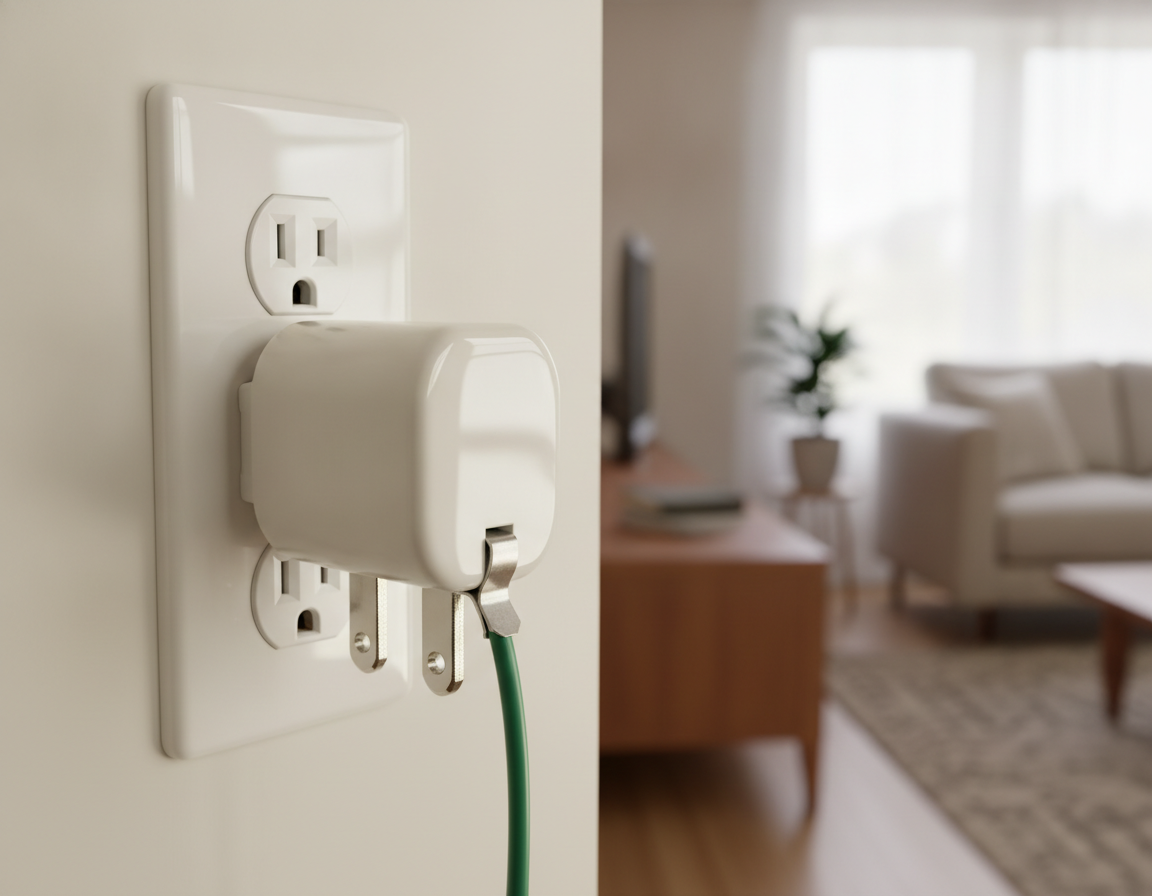
Regulatory and certification bodies such as UL, FCC, and CE require or evaluate grounded designs for many high-power devices sold in the U.S. and overseas. Compliance affects market access, warranty protection, product liability, and insurance claims after damage or loss. Using a three-prong Grounding Outlet Adapter on an ungrounded circuit may affect warranty terms and could influence homeowner insurance if a fault causes damage.
Long-term safety depends on upgrading two-slot outlets to properly grounded three-prong receptacles by a licensed electrician. This avoids relying on temporary solutions such as cheater plugs, improvised adapters, or unapproved Grounding Adapters. It improves protection for people and equipment.
- How grounding prevents shock: sends fault current to earth rather than allowing it to pass through a person.
- How grounding limits overheating: prevents voltage buildup that accelerates insulation failure.
- When to choose a grounded solution: for laptops, GaN chargers 65W+, and other high-wattage devices.
Grounding Outlet Adapter: Types, Components, And Common Names
Suppliers and manufacturers may describe the same type of product using several different names. When shopping, search for terms such as Grounding Adapter, Ground Plug Adapter, and Grounding Adaptor Plug. Other common names include Ground Lift Adapter, Grounding Plug Adapter, Grounded Plug Adapter, Ground Adapter, Grounding Outlet Adapter, Grounded Adapter, and Outlet Ground Adapter.
Product labels can be confusing. A travel-style Ground Adapter may simply change the pin arrangement without providing a real earth connection. By contrast, the term Grounded Plug Adapter suggests a dedicated earth conductor linked to the device chassis. The phrase Grounding Adaptor Plug is commonly used for adapters intended to provide a ground connection at older two-slot outlets when the box is properly grounded.
Physical plug standards matter because they affect fit, grounding, and user safety. Most U.S. homes use NEMA 5-15 style outlets in two-prong or three-prong versions. Travel products often refer to Type A and Type B plugs for North America. Europe uses Schuko Type E/F, the United Kingdom uses BS 1363, and Australia/New Zealand use AS/NZS 3112. Select an adapter that fits the local socket standard and preserves a continuous earth path.
Electrical ratings define safe use. Review voltage and current specifications carefully. Typical U.S. household gear runs at 120V/15A. Higher-draw appliances and some chargers require 16A–20A ratings. Insulation class is also important. Class I devices require a protective earth connection. Class II devices are double-insulated and do not depend on a ground connection.
High-efficiency chargers using GaN or high-power supplies can run hot. Confirm the adapter’s thermal and current capacity before pairing it with a 100W+ charger or heavy-load appliance. A Ground Plug Adapter with an undersized rating may overheat, soften, or fail during sustained use.
Inspect internal grounding features before use. A proper device will have a physical earth pin or grounding tab tied to the internal chassis or ground conductor. Where possible, test continuity between the earth pin and the grounding lug. Manufacturers such as Wecent and other ISO9001 factories publish grounding continuity and low-resistance thresholds for their grounded adapters.
| Category | Key details | Why this matters |
|---|---|---|
| Labeling | Ground Adapter, Grounded Plug Adapter, Grounding Adaptor Plug, Outlet Ground Adapter | Names vary widely, so confirm the actual grounding design in the datasheet |
| Plug Standard | NEMA 5-15, Type A or B, Schuko E/F, BS 1363, or AS/NZS 3112 | Confirms the adapter fits the socket and places the earth contact correctly |
| Voltage and amperage | Voltage and current ratings suitable for the device load | Proper ratings help prevent overload, overheating, and adapter damage |
| Device class | Whether the device requires protective earth or is double-insulated | Helps avoid using an ungrounded adapter with equipment that needs earth protection |
| Ground Continuity | Physical earth pin, grounding tab, low ohm resistance | Verifies fault current can travel safely and trip protection |
| Thermal Rating | Flame-retardant housing and sufficient conductor capacity | Reduces the risk of melting, deformation, or internal failure |
Use simple tests and spec checks before relying on any grounded accessory. A clearly marked Grounded Plug Adapter or Outlet Ground Adapter can be a good starting point. Confirm that the earth pin has continuity and that the voltage, amperage, and thermal ratings match the connected device.
Checking Outlet Grounding And Adapter Safety Before Use
Before plugging in a high-draw device, perform a few quick checks to ensure safety. Simple tests can uncover wiring faults and help determine whether a Grounding Adapter or Grounding Outlet Adapter is appropriate. If you are uncertain about the result, stop and contact a licensed electrician.
Testing Tools For Verifying Grounding
Use a receptacle tester to quickly assess wiring patterns. The lights can indicate faults such as open ground, open neutral, or reversed hot and neutral. Always read the tester manufacturer’s legend so the light pattern is interpreted correctly.
Confirm findings with a digital multimeter. Measure voltage between hot and neutral, hot and ground, and neutral and ground. Use continuity mode to verify the path from the outlet ground pin or cover screw back to the panel ground or grounding conductor.
Checking Wiring And Circuit Capacity
Open the service panel and note the breaker amperage for the circuit you plan to use. Most modern circuits are 15A or 20A. Ensure the breaker matches the outlet wiring gauge and device load.
Check for older wiring signs, including cloth-insulated conductors, knob-and-tube clues, or two-prong branch circuits. Homes with a 30A or 60A main service and legacy wiring may not safely support modern high-draw equipment without upgrades.
| Safety check | How to check | What it means |
|---|---|---|
| Continuity of ground path | Check low-resistance continuity back to the panel ground | Shows a true protective ground path for a Grounded Adapter |
| Multimeter readings | VM between hot-neutral and hot-ground with multimeter | Normal readings indicate correct wiring; abnormal readings signal faults |
| Breaker rating | Compare panel label and breaker amperage with device current draw | Confirms circuit capacity for safe operation |
| Receptacle condition | Inspect for secure mounting, cracks, looseness, or heat marks | Damage means repairs are needed before using a Grounding Plug Adapter |
When A Three-Prong Adapter Can Be Used Safely And When To Avoid It
A three-prong adapter or Grounding Adapter is suitable for short-term use only when the outlet box is verified to be grounded. Attach the adapter’s grounding tab to the outlet cover screw and confirm continuity to the service panel ground before relying on it.
Never use a Ground Lift Adapter or cheater plug as a permanent fix. Avoid three-prong adapters if the wiring is unknown, the cover screw has no ground continuity, or the circuit rating is too low for the device. In these situations, have the outlet upgraded or ask a licensed electrician to install a proper grounded receptacle.
Safe Use And Installation Best Practices For Grounding Adapters
Before installing a grounded adapter, conduct a basic inspection. Look for damage, loose screws, and visible wiring on the outlet. Also confirm that the breaker rating is suitable for the device load.
How To Install Three-Prong Grounding Adapters Properly
To use a three-prong adapter on a two-slot outlet, attach the grounding tab or lug to the outlet cover screw. This helps create solid contact with the metal outlet box when that box is properly grounded. Tighten the screw to prevent movement. Next, verify continuity with a receptacle tester or multimeter to confirm the earth connection.
Make sure the adapter fits securely in the receptacle. A loose Grounding Adaptor Plug or Ground Plug Adapter may arc, heat up, or fail. Only test the outlet under load after confirming continuity and breaker capacity.
Selecting The Right Adapter For Your Device And Use Case
Ensure the adapter’s voltage and current rating match your appliance. High-wattage chargers, like GaN models rated 65W and above, need a Grounded Adapter. Devices consuming 100W or more require grounded designs and must comply with CE or FCC rules.
Choose UL-listed, CE-marked, or RoHS-compliant products to reduce risk. For travel, select adapters rated for the destination voltage and fitted with a proper ground pin where needed. If your device requires earth protection, avoid universal travel adapters that do not provide a true Outlet Ground Adapter function.
When To Get Professional Electrical Help
If tests reveal uncertain grounding, old or cloth-insulated wiring, or false-positive tester results, hire a licensed electrician. A licensed electrician is needed for proper three-prong outlet upgrades, new grounding conductors, or dedicated circuits for heavy appliances.
Get professional help immediately if you notice outlet discoloration, burning smells, heat marks, or loose connections that keep returning. Keep records of professional repairs and use certified Grounding Outlet Adapter products. This can help preserve warranties and meet insurance requirements.
Specifying And Sourcing Grounded Adapters For Travel, Home, And B2B Procurement
Start by reviewing the application and the power needs of each connected device. For laptops and high-power chargers, opt for a Ground Adapter with a true earth pin. Ensure the adapter supports a voltage range of 100–240V for travel. The current rating should match the home circuit and device load, commonly 15A, but sometimes 16A to 20A for heavier equipment.
Look for visible safety marks on the Grounding Plug Adapter. Marks such as UL, CE, RoHS, and FCC indicate compliance support for U.S. use and export markets. For specific markets, add PSE for Japan, KC for Korea, and CCC for China to the list of certifications.
Look beyond the safety logos and examine the technical specifications. A Grounded Plug Adapter datasheet should list maximum voltage, continuous current, and temperature rating. Request millimeter drawings and pin measurements to ensure compatibility with various outlets, such as Type A/B, Schuko, and BS1363.
When purchasing, demand evidence of testing. Suppliers should provide 100% functional test reports and batch traceability. Add grounding continuity thresholds and acceptance criteria to the purchase order so production issues are caught early.
For B2B sourcing, prioritize manufacturers with ISO9001 systems and in-house testing capabilities. A clear statement about per-unit testing, simultaneous multi-certification support, and compliance across EU, U.S., and Asia-Pacific reduces product liability and speeds market entry.
When purchasing Grounding Adapters, factor in cost, certification work, and lead time. Grounded designs may carry a 5–10% OEM premium because of earth-pin engineering and certification costs. Typical white-label SKUs start at a 200-piece MOQ with a 6–8 week lead time. Higher customization increases MOQ and extends delivery windows.
When specifying mechanical and electrical parameters, include a minimum 16A rating for high-power applications. Include requirements for flame-retardant housing, terminal screw torque, and solder or crimp quality checks. Demand engineering change control clauses to lock validation test methods before mass production.
Consumers should prioritize grounded models when shopping. A Grounding Adaptor Plug with UL certification and a clear voltage range is safer than an unlabeled travel adapter. Remember that travel adapters do not convert voltage, so use them only when the device supports the destination voltage.
Procurement teams should map suppliers by design-for-manufacturability skill, certification lab relationships, and in-line testing capacity. Negotiate sample runs to test Grounding Plug Adapter performance under real loads and confirm traceable batch or serial IDs for recalls and warranty support.
Below is a compact comparison to guide buying decisions for typical scenarios.
| Application | Suggested Minimum Rating | Primary Compliance Mark | Notes |
|---|---|---|---|
| Travel chargers for phones and laptops | 100–240V, 2.5–3A per USB port; 15A for full outlet | CE, FCC, UL | Make sure the plug fits and that grounding is actually provided |
| Home power strips & stations | 100–240V with 15A to 20A continuous rating | UL listing and RoHS compliance | Choose a Grounded Plug Adapter with surge protection and thermal safety ratings |
| OEM/volume supply | 100–240V, minimum 16A; product-specific specs | ISO9001, CE, UL, PSE/KC/CCC as needed | Include traceability, validation, and change-control requirements |
| Professional installers and parts | Match device and circuit amperage, commonly 15A to 20A | UL certification and documented testing | Use suppliers that document certifications and installation accessories |
Select sellers that provide complete datasheets and test reports. Retailers and distributors who provide clear certification details make it easier to verify a Ground Adapter before purchase. For installers who need related parts and accessories, consult specialty suppliers that list outlet hardware and testing tools.
Grounding Outlet Adapter Summary
Choosing the right Grounding Outlet Adapter is critical for safety and the longevity of your devices. A grounded adapter provides a clear path for fault current, helping reduce shock and fire risks, especially with high-wattage equipment. Before using any Grounding Adapter or Ground Plug Adapter, it is vital to check the outlet’s grounding and circuit capacity. Use a receptacle tester or digital multimeter to perform those checks.
To reduce risk, do not use cheater plugs on ungrounded circuits. If you need a long-term grounded solution, have a licensed electrician upgrade two-slot outlets to three-prong grounded receptacles. When traveling or using high-power chargers such as GaN 65W+ units, choose a certified Grounded Adapter or Grounding Outlet Adapter. Ensure it carries CE, UL, FCC, and RoHS marks. Also, insist on functional testing for bulk B2B purchases.
Remember, properly grounded designs might cost 5–10% more but greatly lower liability and open up new markets. If you suspect ungrounded outlets, it is important to schedule an electrician inspection. Always purchase UL/CE-certified Ground Plug Adapter products when needed. Before travel, verify that each device supports the local voltage. Use a transformer for appliances that do not support dual-voltage.
For tools, parts, and professional-grade accessories to install or verify grounding, rely on reputable suppliers. They should list outlet accessories and testing equipment. Following these guidelines helps ensure safer use of Outlet Ground Adapter products while supporting electrical system reliability and compliance.