
Nearly 30% of home plumbing emergencies start at a failed stop valve. This points out the critical nature of the right water control valve. It’s as critical as the appliance it feeds.
Best Website To Purchase 3/8 To 3/8 Shut Off Valve
This guide presents a functional overview of the chrome compression angle stop valve. It details its definition, its function in modern plumbing, and the perks of accurate setup. DIYers and pros will find practical insights for various applications, from sink isolation to kitchen and laundry appliance links.
We cite trade sources and example items, like chrome brass versions with integrated seals. This clarifies how they fit with typical pipe stubs and supply pipes. If you are handling a do-it-yourself fix or buying parts from distributors like Installation Parts Supply, comprehending the compression angle stop is crucial. This ensures you identify the most suitable control fitting for your project.
Insight Into Angle Stop Valves And Compression Joinery
Angle valves are space-saving shutoffs that alter the path of water perpendicularly connecting a stub-out pipe and the supply hose. A common 1/2-inch angle stop sits under sinks and in back of commodes. It delivers a point-of-use shutoff without cutting water to the whole building. Residents and plumbers use these valves for routine maintenance, appliance replacement, and quick isolation during diy plumbing repair.
What an angle stop does:
- Delivers a point-of-use isolation at various household fixtures.
- Fits confined areas where a linear stop would be impractical.
- Sold in standard dimensions such as 1/2 inch angle valves or compact 1/4″ models.
How the compression seal works
Compression-style valves utilize a nut and ring that squeeze onto the pipe material (with a support insert) to establish a mechanical joint. The compression-type valve goes on without sweating, which accelerates installation and simplifies later valve swaps. Plumbers torque the nut to seat the ferrule onto the pipe; the ring clamps and seals the pipe.
Why professionals and homeowners choose compression
- Absence of heat or hot work makes compression ideal for renovation work and confined spaces.
- Valves like the 1/2″ angle stop are exchangeable without trimming the stub provided the ring and nut are in good condition.
- This method is reliable with copper pipes and PEX tubing provided you use the correct supports or sleeves.
Compression against sweat and threaded fittings
Compression removes the need to solder and is faster for numerous repair scenarios. Sweat connections provide a lasting bond that traditionalists favor for new construction. Threaded setups, such as twisting a stop into an FIP drop-ear 90, allow easy removal but require careful alignment and tape. Debates on forums often revolve around buried threaded nipples compared to soldered adapters and looks where pipes show under sinks.
| Fitting Method | Benefits | Drawbacks |
|---|---|---|
| Compression Fitting | Fast setup, no solder, simple to swap, compatible with copper and PEX | Ring might need replacing after repeated disassembly; less permanent than solder |
| Soldered | Durable, solid bond, favored for longevity | Needs a torch, fire risk, takes longer to install |
| Threaded Connection | Serviceable, secure mechanical connection, good for repeated maintenance | Needs good sealant, risks with buried nipples, can be bulky in tight spaces |
Chrome Finish Compression Stop Valve
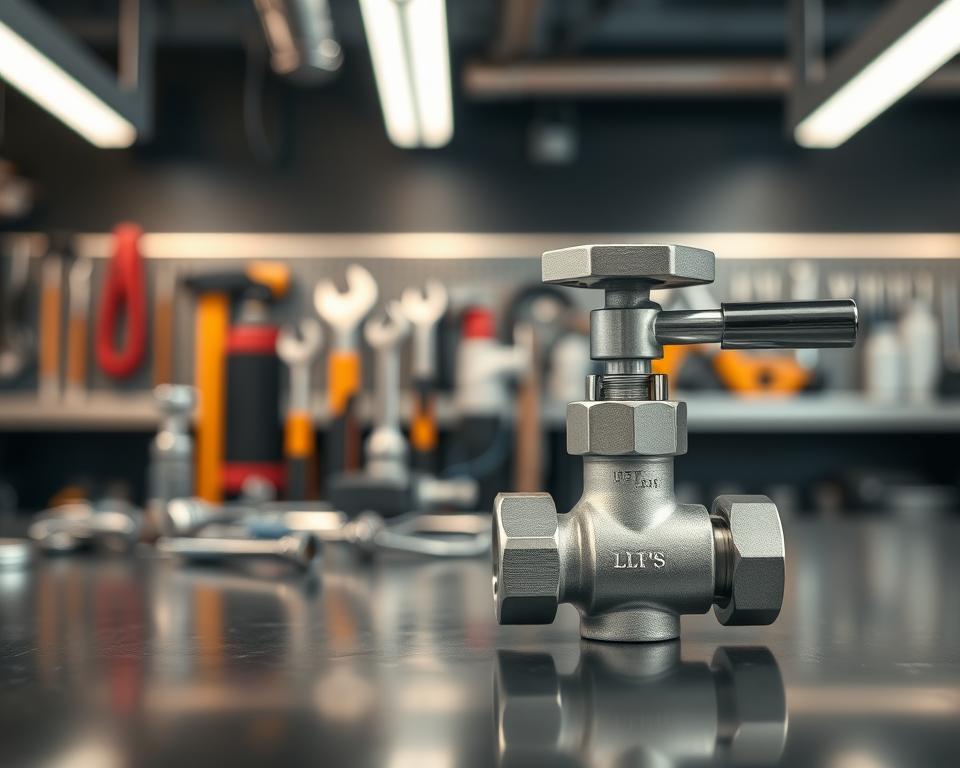
This chrome valve is a perfect blend of looks and performance for open pipework. It is built to satisfy the requirements of consumers and pros alike, owing to its brass body with chrome finish. This feature makes it a common selection for exposed stop valves and fast fixes.
Understanding The Chrome Plated Brass Design
Premium stop valves are made with machined brass bodies finished in chrome. This coating aligns with bathroom hardware and provides a sleek aesthetic that fights discoloration. Brass is chosen for its strong metal base, making sure it is suitable for potable systems.
Companies like Schell, Moen, and others sell plated varieties. They also provide models with integrated seals. Catalogs list the finish, sizes, and if the unit includes a adjustable packing or a factory-fit compression nut.
Performance Highlights: Durability And Rust Resistance
Brass is prized for its durability against corrosion and capacity to resist metal degradation in household water conditions. The outer layer contributes an added shield. This helps keep the valve matching with faucets and restroom fittings.
Integrated seals do away with the need for additional pipe dope at installation time. Robust inner mechanisms and maintainable seals promote a long lifespan. These features offer dependable isolation after repeated use.
Typical Locations For Chrome Angle Stops In Kitchens And Baths
Chrome angle valves are ideal for under bathroom sinks, behind the WC, and inside kitchen cabinets. Their small footprint is perfect for limited clearance. They work well for perpendicular joins.
Frequent picks are the 1/2 compression angle stop or a 1/2 x 1/4 variant, contingent on the supply tube size. Product pages usually show images of the finish, seal details, and cost info. This clarifies buyer expectations for plumbing parts and plumbing fixtures.
Angle Valve Sizes And Connection Standards
When choosing an shutoff valve, interpreting size markings is vital. Producers mark inlet and outlet sizes as nominal pairs, like 1/2 x 1/4 angle stop or 1/2 by 1/2 valve. These designations signify fitment with various units and tubes.
The phrase 1/2 angle stop typically denotes a 1/2″ inlet, made to attach to supply stubs. This inlet can fit a smaller outlet, like a 1/4 angle stop, for precise fixture connections. A 1/4-inch stop is commonly employed for skinny supply lines or appliance inlets.
Sometimes, a 1/2 x 1/4 angle stop is picked when the supply line is standard 1/2″ pipe, but the fixture requires a reduced connection. For setups where inlet and outlet match in size, a 1/2 by 1/2 stop is used. Make sure to check the inlet and outlet dimensions before making a purchase.
Compression valves are popular for their simple installation. A 1/2 inch compression stop matches regular 1/2 inch pipes with the correct ferrule or insert. Lots of distributors stock a 1/2 inch compression stop, including a nut and ring for quick install.
Be aware that certain valves are labeled in metric, such as DN 15 for a 1/2 inch equivalent. Ensure the part corresponds to the supply pipe and flexible hose fittings on site. Confirm if the product comes with an integrated seal or if a separate ferrule is required to ensure smooth install.
Picking The Best Valve: Compatibility And Sizing
Picking the proper valve begins with precise measurements and making sure the input style fits the wall pipe. Inspect the pipe for its outside diameter on copper pipes. Look for threads and identify if the outlet ends in a drop-ear 90 or a plain copper stub. This verification can stop wrong orders and conserve time on the job.
Measuring Stub-outs And Checking 1/2 Valve Fit
Gauge the copper pipe by their outer diameter. A standard 1/2 inch pipe is about 1/2″ OD. If it is threaded, determine whether they are FIP or MIP. When using compression, verify that the smooth area and pipe length permit good contact with the ring and nut.
Plumbing standards often favor fixed elbows or soldered adapters for rigidity or consistent ferrule seating. Align these details to the valve type to make sure the angle valve 1/2 fits without requiring hacky solutions.
Spotting 1/2 x 1/2 Valves Versus Different Styles
Read the box and specifications thoroughly. A 1/2 x 1/2 compression shut off valve will show both sides as 1/2 inch size. On the other hand, a 1/2 by 1/4 valve will possess a reduced output for fixture tubing or a flex hose.
When swapping stops for a upgrade, compare the outlet size to the faucet line. Confirm the valve style fits the setup. Some pros keep separate chrome compression angle stop valve inventory for exposed locations and standard brass for hidden shutoffs.
Verifying Integrated Seals And Pre-fitted Nuts
Look at the specs for ferrules, nuts, or built-in gaskets. Certain models, like those from Schell, feature factory-fit compression nuts or integrated seals. These additions speed up the job and reduce the need for thread tape.
Compression models often specify if the valve includes fitted rings or a pre-attached nut. Opt for valves with documented integrated seals for a leak-proof, quick installation, which is critical in small spaces.
Guide To Installing Leak-Resistant Angle Stop Valves
Begin by meticulously preparing the stub-out. Employ a good pipe cutter to cut the tube straight. Ensure the end is smooth and squared for even ferrule seating. Place the compression nut and ferrule on the pipe correctly prior to fitting the valve. Clean the threads of elbows or female adapters and check the depth to ensure good fit.
To install a compression stop, gently push the ring against the valve inlet while tightening the nut. Stabilize the valve and tighten slowly. This promotes uniform pressure of the ferrule. Follow instructions, often hand-tight plus a quarter to a half turn with an adjustable wrench.
If installing chrome, care for the plating. Plated finishes can scratch easily. Employ soft-jaw pliers or a rag to protect the look during tightening. Go slow and check the connection. Too much torque can crush the ring or strip threads, resulting in drips.
Compression connections usually don’t require thread tape. Apply thread sealant or tape solely on IPS threads, per instructions. Models with gaskets or integrated O-rings may not need tape or sealant at the valve-to-connector interface.
To ensure a leak-free install, test under normal system pressure. Inspect the compression nut and ring for seepage. If a minor leak appears, tighten incrementally. If leaks continue, disassemble, check, put on a new ring, and reinstall.
Lots of pros prefer sweat or threaded connections for long-term jobs. Industry habits frequently utilize drop-ear elbows for simple replacement without shortening the pipe. Select the technique that best suits the fixture access and maintenance needs.
Tools And Materials For DIY Plumbing Repair With Chrome Valves
Having the right tools and components is critical to a good home repair. Ensure your workspace is clear, confirm the valve model, and gather all necessary items before starting.
Must-have tools
An adjustable wrench and a backup wrench are necessary for holding fittings while you turn the valve. A good pipe cutter is essential for clean cuts on copper pipe, reducing leak risks. Use a reamer or file to clean the edge after cutting. A protective cloth or soft-jaw wrench will save the plating during tightening. Flaring kits, though less common for comp fittings, are useful for flare fittings.
Recommended consumables
Make sure to use new sleeves and fresh compression nuts during replacement. Keep washers, O-rings, and gaskets available for valves needing them. Choose manufacturer-specific ferrules for the optimal fit and seal performance.
Shutoff procedure
Before starting, find the isolation valve or main water shutoff. Turn on the faucet and stop to drain remaining water from the line. If working near an electric water heater or garbage disposal, cut the power. Use safety glasses and check for pressure before unscrewing.
Sourcing components
Suppliers like Installation Parts Supply offer bulk compression nuts, new ferrules, and chrome valves. They cater to contractors and homeowners doing multiple installs. Buying the right size and brands upfront minimizes callbacks and keeps projects on track.
Troubleshooting Installation Issues
Minor drips and stuck parts are common during setup. This guide guides you through useful steps for fixing drips. It also discusses dealing with wall-mounted stub-out dilemmas and steps to avoid problems with a buried nipple in the wall.
Leak detection
Start by isolating the origin: connection, riser, or stem. A drip at the nut often means ferrule seating, improper torque, or a bad ring.
If you see a tiny leak, loosen it, remove the valve, check the ring and pipe end, then fix or swap the hardware. Cut back any burrs or damage on the pipe before reassembly.
Sealed valves must be checked visually. If the gasket is ripped or displaced, swap the unit. When diagnosing leaks, document the exact location to stop guessing.
Dealing with wall stubs
Plumbers debate threaded elbow versus sweat fittings during construction. A drop-ear allows threading and be changed without cutting the stub-out. This approach supports a long-term maintenance plan when service access is needed.
Soldered joints produce a solid connection. They lower risk of seepage at the joint, however, sweat joints make future valve swaps harder. Pick solder when permanence and low maintenance are key.
Buried nipple issues
A buried nipple can rust or stick inside the wall, creating a stuck valve and difficult repair. Advice from experts like Peter Hemp emphasizes careful rough-in planning to prevent this.
Best practice is to use drop-ear elbows, a threaded elbow left exposed, or a solder adapter during installation so the connection never becomes permanently buried. This forethought lessens the need to break open walls for valve replacement.
Practical fixes and preventive steps
- Replace ferrules and nuts if deformity is visible; brass rings often deform if too tight.
- Trim and clean pipe if the end is bad; a smooth end helps the seal.
- Prefer fittings at rough-in that permit serviceable swaps to maintain a leak-resistant angle stop valve approach.
| Symptom | Probable Cause | Remedy |
|---|---|---|
| Leak at nut | Improper ferrule seating or damaged ferrule | Back off nut, swap ring/nut, recut tube, tighten correctly |
| Packing leak | Worn packing or bad bonnet | Turn off water, snug packing nut, replace valve if packing is damaged |
| Frozen valve | Rust or stuck threads | Cut back to accessible fitting, use drop-ear or adapter at rough-in |
| Frequent leaks after solder | Poor solder joint or dirty flux | Desolder, clean, solder right or convert to threaded elbow where serviceability matters |
Quality, Certifications, And Product Examples
In valve selection, approvals are key. NSF/ANSI 61 confirms potable water safety, while ANSI/NSF 372 verifies lead-free status. ASME and CSA standards are important for projects subject to regional codes. Catalog descriptions specify flow rates and DN sizing, DN 15 being a 1/2″ connection.
It is important to compare product features to fit the job. Sealed versions eliminate the need for additional tape or sealant. Internal check valves and flow controls address code needs. The design of the packing gland and included ferrules or nuts affects both installation time and leak resistance over time.
The Schell DN15 model with integrated seal demonstrates how manufacturers present specs and finish. Ratings and Best Sellers rankings are valuable for judging quality in plumbing parts. Trusted brands often offer combination valves with check valves or flow controls for specific uses.
Suppliers help procurement for builders. Firms such as Installation Parts Supply get chrome valves from reputable manufacturers. They confirm certs and warranties. It’s important to check price differences, check stock, and confirm certifications match job needs before bulk buying.
Use this checklist when evaluating valve options:
- Certifications: NSF 61/372, ASME, CSA as needed.
- Specs: integrated seals, check valves, flow limiters, packing gland design.
- Fit: Metric/Imperial size, connection type, hardware.
- Buying: stock, warranty, supplier trust.
Save copies of certification numbers and batch details when purchasing. This documentation aids in code inspections and future maintenance. Store pages and supplier books usually provide spec sheets for every valve, aiding in finding the right part.
Upkeep, Lifespan, And When To Replace
Ongoing upkeep is key to keeping valves in top condition and making them last. A quick check biannually can spot problems before they escalate. It helps to note resistance, minor drips, or corrosion to track trends.
Replacement signs
Visible leaks around the compression nut or persistent dripping from the valve stem show it needs replacing. Rust or pits of the chrome finish weakens the metal, leading to faster failure. If a 1/2 angle stop or 1/4″ stop becomes stiff or seized, it indicates that it needs to be replaced.
Maintenance advice
Cycling valves by turning on and off a few turns helps prevent seizing. Clearing aerators and hoses regularly reduces sediment and mineral buildup. In areas with hard water, consider adding a softener or installing a sediment filter to reduce buildup that kills valves.
Compression ferrules and joint care
Compression ferrules crush when tightened and should be replaced whenever a joint is disturbed. Using old rings causes leaks at the joint. Always install new hardware when fixing to guarantee a seal.
Upgrading valves
Persistent leaks, repeated service calls, or hard installs are good reasons to consider upgrading. Explore sealed valves, combo valves with built-in check valves, or switching from buried threaded nipples to sweat adapters for better access. Changes can boost life and reduce downtime for both homeowners and plumbers.
How long they last
Quality chrome-plated brass valves can last decades under normal conditions. The real life depends on water quality, how often used, and how well installed. Spotting issues of failure signs and regular maintenance can maximize the performance of a 1/2 valve or 1/4 angle stop, stopping surprise leaks.
Cost Considerations And Buying Guide For Homeowners And Pros
Buying a valve is a trade-off between budget, project scope, and long-term value. Buyers weigh many things. These include the material, finish quality, and if it has integrated seals or check valves. A pricier 1/2 x 1/2 angle stop valve, of solid brass with a thick chrome finish, will outlast pot metal in exposed spots.
Buying retail are fine for minor fixes where only one unit is needed. Pros, however, like wholesalers for their bulk rates and stock. Installation Parts Supply offers a bigger range of approved valves and better warranties. This can help reduce the project cost when purchasing many 1/2 compression angle stop pieces.
Budgeting should consider beyond just the part cost. Factor in ferrules, compression nuts, adapters, and basic tools for replacements. For bathroom hardware projects that are visible, match the finish and trim to the taps to look professional. For hidden valves, prioritize serviceability and dependability over looks.
Comparing sources, check warranty terms, return policies, and papers. Distributors can lower per-unit cost, but some retail lines give lifetime guarantees that balance the cost. Factor in saved labor using better valves when budgeting.
Use this quick checklist when choosing valves and parts:
- Brass and chrome quality for long life and looks.
- Integrated seals or checks to simplify install.
- Fit with pipes or fittings to avoid rework.
- Vendor trust and warranty, especially from suppliers like Installation Parts Supply.
In short, weigh upfront cost against lifespan and serviceability. Investing a bit more in a well-made 1/2 x 1/2 angle stop valve or a durable stop can lower maintenance calls and better the outcome on plumbing projects.
Wrap-Up
Picking the correct valve takes a few steps. First, ensure the sizes match your needs. Understanding how compression joints work is key. Finally, use good install methods to ensure a long-lasting, leak-resistant valve.
If doing a home repair or a professional installation, some steps matter. Swap ferrules when servicing. For easier installations, use sealed valves. Torque it right and sealing method to ensure a reliable fit.
Proper tools and attention to detail are vital for a good install. This approach minimizes the risk of leaks after installation. When purchasing, use good suppliers such as Installation Parts Supply. They sell certified chrome-plated brass valves and integrated-seal models, like Schell valves, meeting water codes.
Using proper parts, sizing, and craftsmanship, both homeowners and professionals can achieve durable, good-looking, and long-lasting installations. This guarantees years of use from your chrome stop valve.
Related: Benefits Of A Brass Forged Compression T Fitting In High-Pressure Lines